
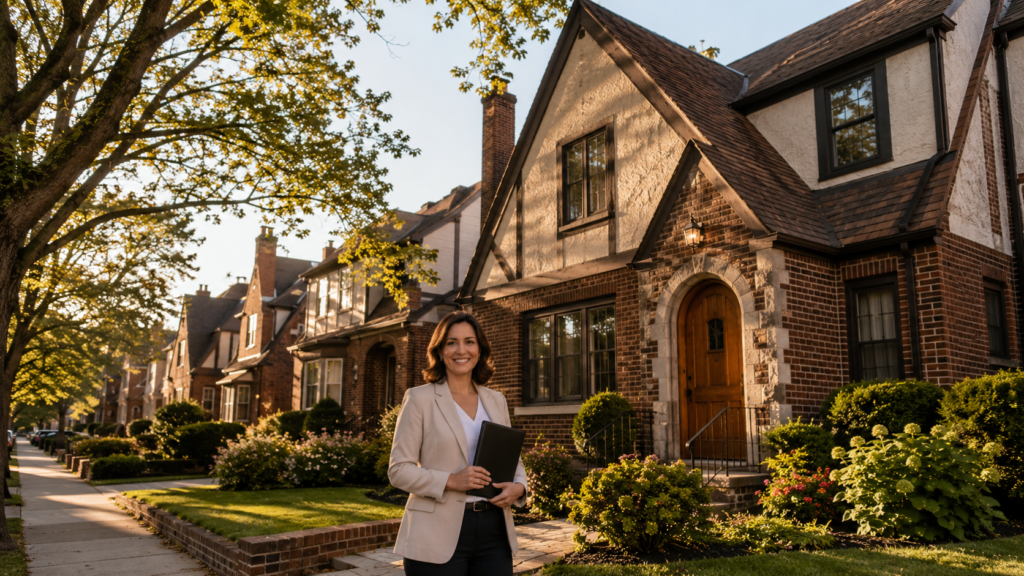
The house you want in Rego Park is hiding in plain sight. Most people think of the neighborhood as apartment country. Towers on Queens Boulevard, prewar buildings on the side streets, a four-floor shopping center anchoring it all. That is part of the picture, and it is the part everyone sees from the train. But it is not the whole neighborhood, and it is not where the most interesting real estate is.
Tucked into the southern half of Rego Park is one of the best collections of single-family and attached houses in central Queens. Tudor-style homes with brick and stucco facades, peaked gables, small front yards, and trees that arch over the sidewalk. They were built with intention almost a century ago, and they still live better than most of what gets built today. If you want a house with character in this part of the borough, this is where you look. And it is quieter than the buyers chasing Forest Hills ever realize.
As a Keller Williams agent who works Rego Park, I have one of these houses listed right now. So this is not a summary pulled off a map. This is what I tell buyers who ask whether Rego Park is the right place to own a home.

A Neighborhood Built on Purpose
The name tells the story. Rego is short for the Real Good Construction Company, which bought up farmland and began building here in the mid-1920s. They put up more than 500 Tudor-style homes and named the neighborhood after themselves. Rego Park was planned, not accidental, and you can still feel that intention in how the streets hold together.
The most distinctive part of that plan is an area called The Crescents, in the southern half of the neighborhood. The streets curve in semicircles instead of a grid, with alphabetized, deliberately aristocratic names running from Asquith and Boelsen through Cromwell, Dieterle, Elwell, and Fitchett. The developers wanted the place to sound established before it was. A century later, The Crescents and the blocks around them are the most expensive real estate in Rego Park, full of single-family and attached Tudors on streets that feel nothing like the rest of the city.
That history is not trivia. It is the reason the housing stock here is what it is. The houses were built solid, with detail that does not get reproduced at today’s prices, and the people who own them tend to stay.
The Commute People Underrate
Rego Park has a Walk Score in the 90s, and the reason is simple. You can live here, own a house, and still skip the car for most of daily life.
The 63rd Drive station puts the M and R trains within reach. Take M or R to Jackson Heights Roosevelt Ave station, then transfer to the E express; it gets you into Midtown fast. That combination, an express line plus two locals, is better daily access than a lot of higher-priced Queens neighborhoods offer, and most buyers do not realize it until they time the trip themselves.
Then there is Rego Center, the shopping complex on Junction Blvd with Costco and two dozen other stores. Most house-heavy neighborhoods send you driving for big errands. Rego Park keeps them close. Owning a home here does not mean trading away convenience, which is the usual tradeoff in this borough. You get both.
What a House in Rego Park Actually Costs
Here is the part a listing site will not put in plain language.
Single-family houses in Rego Park are not the entry-level option. They are the top of the market. As of early 2026, houses here generally run from about $850,000 to $1.55 million, with the southern blocks and The Crescents holding the highest values. Inventory is thin. At any given time there are often fewer than a dozen houses for sale in the entire neighborhood, and the well-kept ones move.
That scarcity is the whole point. A house in Rego Park is not something you stumble onto by refreshing a search every morning. These homes do not come up often, and when a good one does, the buyers who already understand the neighborhood are the ones positioned to act. The rest find out it sold.
This is where working with someone local changes the outcome. Knowing which blocks hold value, what a fair price looks like for a Tudor with original detail versus a gut renovation, and how to move quickly when the right house appears is the difference between owning one of these homes and watching it go to someone else.
The Home I Have Listed: 89-14 63rd Avenue
Right now I have a classic Tudor-style attached home listed at 89-14 63rd Avenue, and it is exactly the kind of house this post is about.
It makes an unforgettable first impression. A dramatic pointed gable, rich brick detailing, textured stucco, and a graceful arched entryway speak to the craftsmanship of an earlier era of New York City architecture. Through the arched wooden door, a welcoming entry foyer with a coat closet leads into a bright living room with hardwood floors and a large picture window. The room is anchored by a one-of-a-kind cornerstone fireplace with a striking pyramid-shaped plaster hood and a decorative wrought-iron screen, a genuine architectural centerpiece. The fireplace has been capped.
The living room flows into a formal dining room, which connects to the kitchen, a half bath, and an enclosed porch that extends the living space year-round. Outside, a private fenced backyard offers room for barbecues, gardening, or simply unwinding, and a detached one-car garage is accessible from the shared rear driveway.
Upstairs, a wooden staircase leads to three generously sized bedrooms, all with good natural light and ample closet space, plus two additional hallway closets and a full bath. The basement adds flexible space for a home office, study, or recreation room, with a separate rear entrance, plus dedicated laundry and utility rooms.
It is the whole Rego Park story in one house. Original character, real space, and a location with shopping, dining, and transit a short walk away. If you want to see it, I can walk you through it in person.
Who a Rego Park House Is Actually For
A house here fits a specific buyer. Someone who wants to own rather than rent, wants more space than an apartment offers, and values character over new construction. This is a part of Queens served by neighborhood schools including PS 179 and PS 139, with playgrounds and Forest Park a short walk away. It’s the kind of location that holds its value. It also appeals to anyone trading up from a co-op or condo who wants a deed in their own name and a backyard of their own.
What ties these buyers together is an understanding that the best houses in a neighborhood like this are not abundant. They are quietly held and rarely listed. The opportunity is real, but it favors the prepared.
Frequently Asked Questions
How much does a house cost in Rego Park, Queens? As of early 2026, single-family and attached houses in Rego Park generally range from about $850,000 to $1.55 million. Prices are highest in the southern part of the neighborhood, including The Crescents, where Tudor and single-family homes are concentrated.
Are there single-family homes in Rego Park? Yes. While Rego Park is known for apartment buildings, it has a strong supply of single-family and attached houses, especially in its southern half and in The Crescents. Inventory is limited, often fewer than a dozen houses for sale at a time.
What is The Crescents in Rego Park? The Crescents is an area in the southern part of Rego Park with semicircular streets and alphabetized names like Asquith, Boelsen, and Cromwell. Laid out by the Real Good Construction Company in the 1920s, it contains Tudor and single-family homes and is the most expensive real estate in the neighborhood.
Is Rego Park a good place to live? Yes. Rego Park is a walkable, transit-rich neighborhood in central Queens with strong shopping, well-regarded schools, and a residential feel. Its Walk Score is in the 90s, and it offers express subway access to Manhattan while staying more affordable than neighboring Forest Hills.
What subway lines run through Rego Park? The 63rd Drive–Rego Park station serves the M and R trains. The E is the express into Manhattan that you can transfer to at Jackson Heights Roosevelt Ave Station, while the M and R are local lines, giving residents fast and flexible commutes.
Is Rego Park good for families? Yes. Rego Park offers well-regarded public schools, including P.S. 139 and P.S. 174, plus playgrounds, nearby Forest Park, and single-family homes with backyards in the southern end. It balances urban convenience with a residential, community feel.
Should I work with a local agent to buy a house in Rego Park? Yes. House inventory in Rego Park is limited and the best homes sell quickly, so buyers benefit from someone who knows which blocks hold value and can move fast when the right home is listed. A local agent helps you understand fair pricing and act before a home is gone.
If you are thinking about buying or selling a house in Rego Park, or you want to see 89-14 63rd Avenue in person, the best first step is a short conversation about what you are looking for and what your budget buys in the neighborhood. I am glad to walk you through it.
Claudia Looi Licensed Real Estate Salesperson, SRS, ABR, SFR Keller Williams Landmark II 347-612-2964 Schedule a consultation: https://claudialooi.com/consultation/