
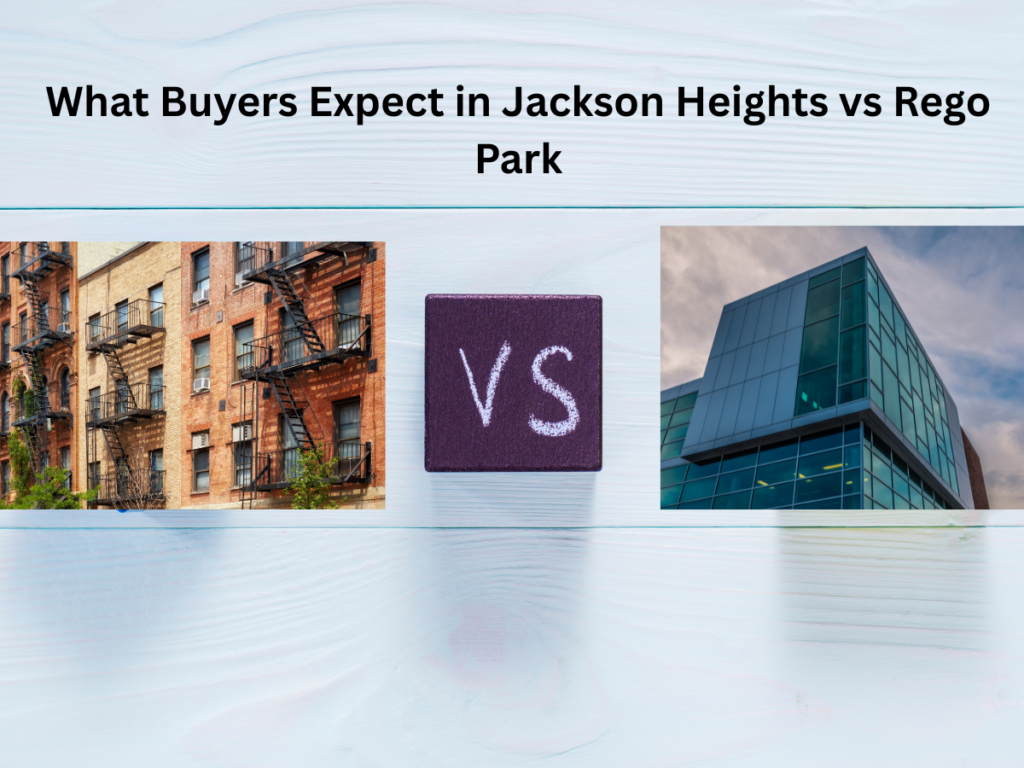
In Queens, buyers don’t just purchase square footage. They buy into rhythm, density, lifestyle, and expectations that change block by block. Few neighborhood comparisons make this clearer than Jackson Heights and Rego Park. While they sit minutes apart, buyers approach these two markets with very different assumptions long before they ever step inside a home.
Understanding those expectations is the difference between a listing that resonates immediately and one that quietly stalls.
The Buyer Mindset Starts Before the Listing Is Opened
Jackson Heights buyers are often decisive before they even tour. Many are already committed to the neighborhood because of its walkability, transit access, cultural density, and historic housing stock. They tend to search with firm criteria and emotional clarity. When they engage with a listing, they are usually asking one core question: Does this home fit my daily life here?
Rego Park buyers arrive differently. Their search is more comparative. They often weigh Rego Park against nearby areas, measuring value, building quality, and long-term practicality. These buyers are less driven by neighborhood romance and more by structure, layout, and efficiency. They want reassurance that the home works not just today, but five or ten years from now.
This difference alone shapes how homes should be presented and priced.
How Housing Stock Shapes Expectations
Jackson Heights homes, particularly co-ops and prewar buildings, carry architectural character and quirks that buyers expect. Smaller kitchens, fewer bathrooms, or unconventional layouts are not deal-breakers when the building and location deliver on lifestyle. Buyers accept tradeoffs more readily, as long as the home feels authentic to the neighborhood.
In Rego Park, tolerance is lower. Buyers expect cleaner layouts, better elevator buildings, newer systems, and a sense of order. A poorly proportioned apartment or dated finishes feel more glaring here because buyers mentally benchmark Rego Park against “modern convenience,” not historic charm.
This is why cosmetic flaws that barely register in Jackson Heights can materially affect buyer response in Rego Park.
Pricing Is Interpreted, Not Just Compared
Jackson Heights buyers read pricing emotionally. A well-positioned home priced correctly signals fairness and respect for the market. Overpricing, however, is quickly interpreted as disconnect, and buyers move on without waiting for reductions. The market here rewards realism from day one.
Rego Park buyers interpret pricing analytically. They compare price per square foot, building amenities, maintenance costs, and recent sales more aggressively. A home priced slightly high may still receive attention if the numbers can be justified. Negotiation is expected, not avoided.
This difference explains why some listings linger in Jackson Heights while others attract immediate interest, even at similar price points.
Timing and Urgency Behave Differently
In Jackson Heights, urgency comes from scarcity. When the right home appears, buyers move quickly because inventory that fits their lifestyle doesn’t surface often. Delayed responses or unclear positioning can lose momentum fast.
In Rego Park, urgency builds later. Buyers take more time upfront but become serious once value aligns. Homes often gain traction after initial feedback cycles, especially when pricing or presentation adapts to buyer expectations.
Sellers who misread this rhythm often panic too early or wait too long.
Negotiation Expectations Are Not the Same
Jackson Heights buyers prefer clean deals. They often negotiate selectively and expect clarity rather than back-and-forth. Excessive countering or shifting terms can erode trust.
Rego Park buyers expect dialogue. Negotiation is part of the process, and concessions don’t automatically signal weakness. A flexible strategy here often preserves deals that would collapse in a more emotionally driven market.
Why This Matters Before You List
The mistake many homeowners make is assuming that proximity equals similarity. It doesn’t. Jackson Heights and Rego Park operate on different emotional currencies, even when price ranges overlap.
Listings that succeed in one neighborhood using a copied strategy from the other often miss the mark, not because the home is wrong, but because the expectations were misunderstood.
Calm Next Step
Homeowners considering selling in Jackson Heights or Rego Park benefit from understanding how buyer expectations differ long before pricing or marketing decisions are made. Two homes with similar specs can experience completely different outcomes based solely on how they align with neighborhood psychology.
Claudia Looi is a Queens-based listing agent who helps homeowners understand how buyer expectations shift between neighborhoods like Jackson Heights and Rego Park, so pricing and positioning reflect how buyers actually think. A one-on-one consultation allows sellers to get clarity before listing, without pressure or guesswork.
About the Author
Claudia Looi is a Queens and Long Island real estate listing agent specializing in neighborhood-specific pricing strategy, co-ops, single-family homes, and rightsizing during major life transitions. Her content focuses on helping homeowners understand how market behavior, buyer psychology, and local conditions affect real-world sale outcomes.