
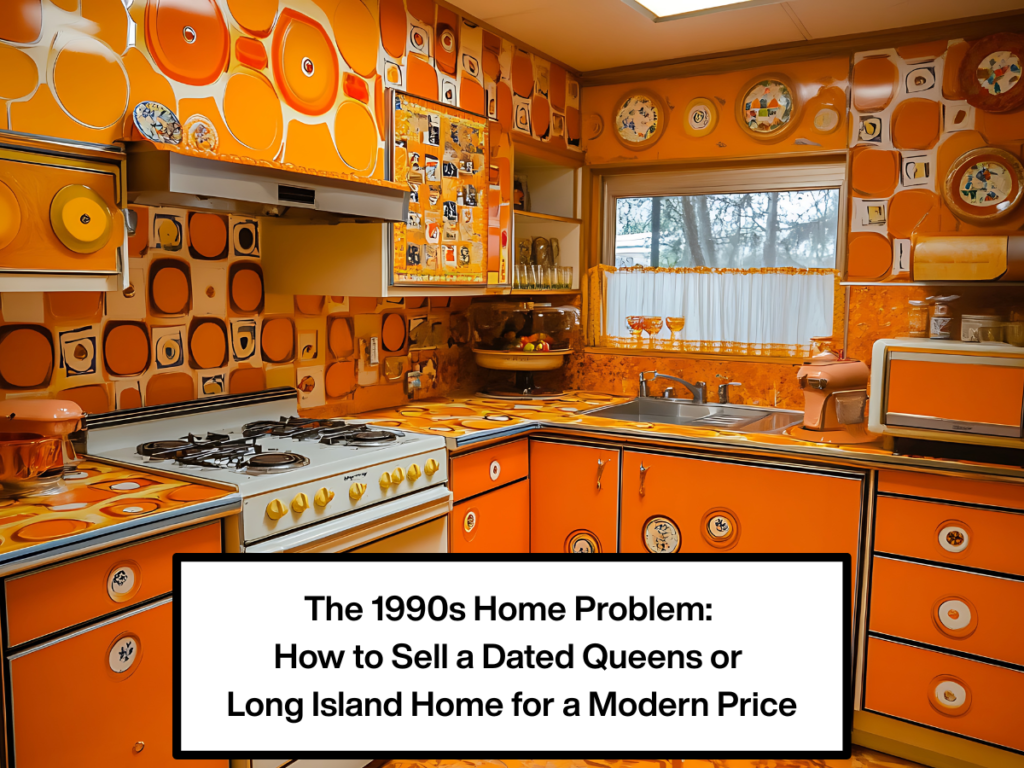
If your home still has honey-oak cabinets, busy granite, wall-to-wall carpet, or a sea of beige tile, you’re not alone.
All over Queens and Long Island, I walk into homes that were proudly updated in the 1990s or early 2000s and then life happened:
Kids
Careers
Parents to care for
Other priorities
Now those finishes that once felt high-end are working against you with today’s buyers, who grew up on HGTV and TikTok makeovers.
But here’s the key:
A 1990s home is not a lost cause.
It just needs a smart “from the 90s to now” strategy.
Let’s tackle the big questions I get from 1990s-era homeowners.
1. “Is my 1990s home unsellable in 2026?”
Not at all.
Inventory in many Queens and Long Island neighborhoods is still limited, and buyers will absolutely consider homes with older finishes, especially in good school districts and convenient locations.
What has changed is buyer expectation:
They scroll past listings that feel dark, heavy, or dated
They mentally subtract “update costs” from your asking price
They compare your home to more modern ones in the same search results
Our job is to narrow that gap without gutting your house.
2. “Which 1990s features turn buyers off the fastest?”
Some features scream “project” to modern buyers:
Heavy orange oak or honey oak everywhere
Ornate, busy tile or backsplashes
Popcorn ceilings
Wall-to-wall carpet in main living areas
Shiny brass everything
Tuscan-style faux finishes and sponge painting
Buyers don’t necessarily know the age of your furnace, but they instantly see:
The oak entertainment center
The hunter green bathroom
The swirling brown granite
That’s why we focus on visual impact first.
3. “Where should I spend money and where should I save?”
National studies on resale ROI show the highest returns on:
Exterior improvements (front door, garage door, stone veneer)
Minor kitchen remodels, not full overhauls
Fresh paint and updated fixtures
Flooring that’s cohesive and in good condition
For a 1990s Queens or Long Island home, I often recommend:
High-impact updates:
Paint wood cabinets instead of replacing them
Replace busy backsplash tile with something simple and light
Swap out brass or super-ornate fixtures for black, bronze, or brushed nickel
Update vanity, mirror, and light in key bathrooms
Replace the most dated flooring (or refinish hardwood if it’s hiding underneath carpet)
Remove wallpaper or heavy window treatments
Places to save:
Keep cabinet boxes if they’re solid
Don’t move plumbing unless absolutely necessary
Delay full kitchen or bath gut jobs if your next buyer is likely to customize anyway
The goal isn’t to pretend your home was built in 2023. It’s to make it feel current enough that buyers feel excited instead of overwhelmed.
4. “Can I sell my 1990s home ‘as is’ and still get a strong price?”
Sometimes, yes, but positioning becomes critical.
If you truly don’t want to touch a thing, we need to:
Price strategically based on condition and comps
Market the home as “well-kept, ready for your modern vision”
Make sure it is spotless, decluttered, and staged as simply as possible
Even without big updates, we can still:
Neutralize paint where possible
Deep-clean carpets and grout
Remove heavy window treatments
Edit furniture for space and flow
Think of it as respecting the buyer’s imagination. The cleaner and more simplified the canvas, the more easily they can picture their own updates.
5. “What if I update the wrong things and waste money?”
That’s where guidance matters.
I’ve seen sellers pour money into:
Top-of-the-line custom tile buyers don’t actually want
High-end appliance packages that don’t match the rest of the house
Niche color choices that limit the home’s appeal
Instead, we:
Look at competing listings in your neighborhood
Identify which features consistently show up in the homes that sell fast
Choose updates that bring you to the pack or slightly above it, not into a different price bracket
Keep the style simple, clean, and broadly appealing
Sometimes the right move is less. A few well-chosen improvements, not a brand-new everything.
6. “How do we market a dated home so buyers see potential, not just problems?”
We lead with:
Strengths: layout, light, lot, location, structure
Cleanliness: spotless presentation
Possibility: light, modern staging and language
For example, instead of:
“Dated kitchen needs work”
We highlight:
“Well-kept, functional kitchen ready for your cosmetic updates. Great layout, good storage, and room to reimagine.”
National advice on selling older homes emphasizes exactly this. Simple changes plus smart positioning often beat over-renovating right before you sell.
Quick Q&A Recap
Q: Do I have to rip out my 1990s kitchen to sell?
A: No. In many cases, paint, hardware, counters, and lighting are enough to dramatically change buyer perception.
Q: Will buyers still buy a home with carpet?
A: Yes, especially in bedrooms, but worn or stained carpet in main living areas is worth addressing.
Q: What if my budget is small?
A: We prioritize high-impact, low-cost updates such as paint, lighting, decluttering, small exterior fixes, and one or two standout improvements.
Your “90s-to-Now” Strategy Session
If you’re sitting in a 1990s kitchen in Elmhurst, Forest Hills, Rego Park, Jackson Heights, Queens Village, or anywhere in Long Island wondering:
“Is this good enough to sell, or do I have to redo everything?”
Let’s talk.
I’ll walk through your home, compare it to what buyers are seeing in your price range, and give you a written, prioritized plan:
What to do
What to skip
What to expect
Text me at 347-612-2964 or schedule a one-on-one call with me here.
We’ll turn your 1990s home into a 2025 opportunity without renovating yourself out of your profit.
About the Author
Claudia Looi is a Queens and Long Island real estate listing agent specializing in neighborhood-specific pricing strategy, co-ops, single-family homes, and rightsizing during major life transitions. Her content focuses on helping homeowners understand how market behavior, buyer psychology, and local conditions affect real-world sale outcomes.